Takiyya al-Sulaimaniyya, Damascus: The Ottoman Mosque Built for Hajj Pilgrims
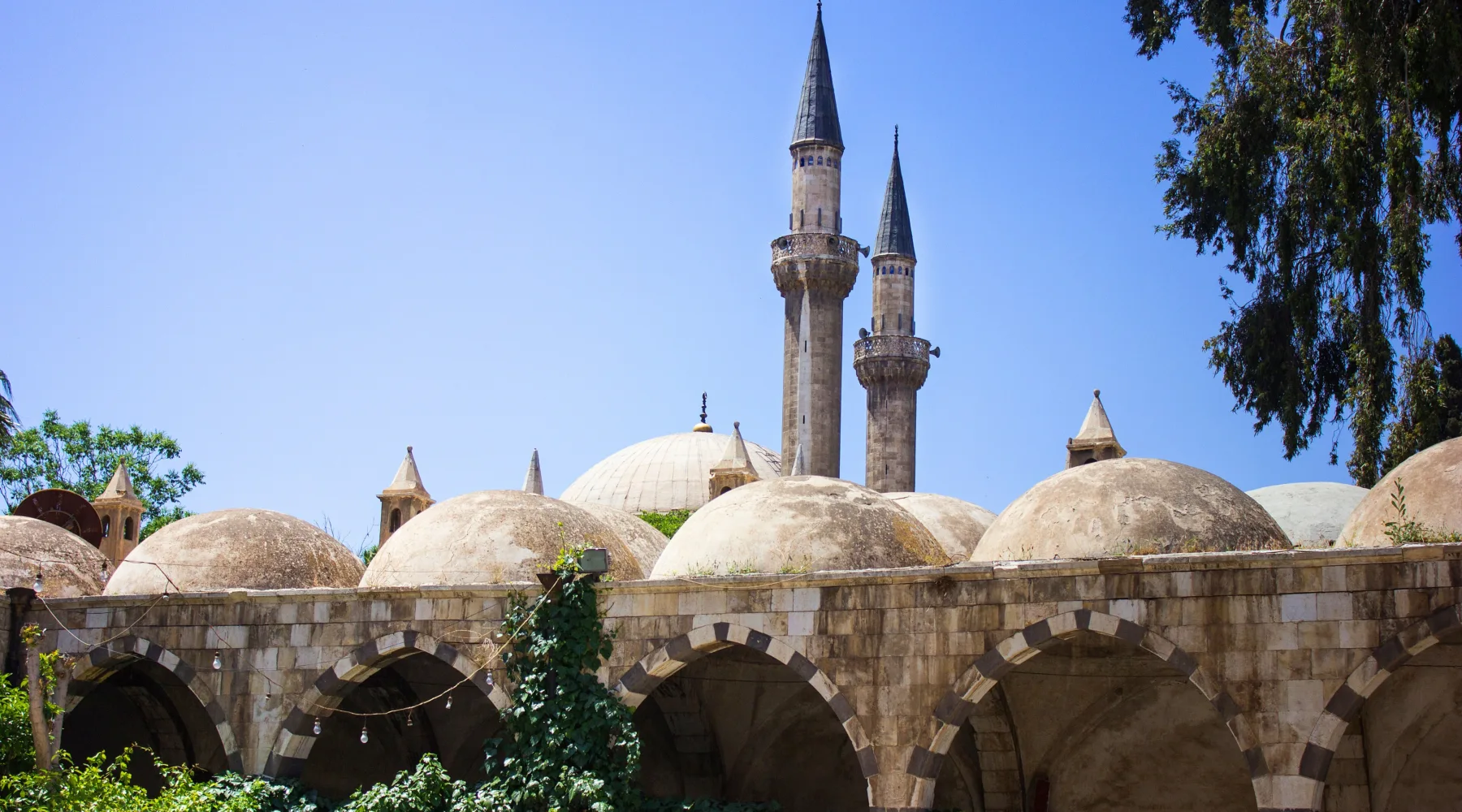
Along the Barada River, near what is today the National Museum of Damascus, stands a mosque and hospice complex built specifically to serve one of the most important journeys a Muslim can make. Takiyya al-Sulaimaniyya was commissioned by Suleiman the Magnificent to house and feed pilgrims preparing for the road to Mecca, and it remains one of the clearest physical reminders of Damascus's historic role on the Hajj route.
Origins: A Palace Ruin Made Sacred
The complex was built on the site of the Ablaq Palace, a Mamluk-era structure originally built for Sultan Baybars that had been destroyed during Timur's invasion around 1400. Roughly a century and a half later, under the governorship of Şemsi Pasha, construction of the western mosque and khan began in 1554, completing around 1558 to 1559.
Tradition credits the design to Mimar Sinan, the celebrated chief architect of the Ottoman Empire, though it's worth being precise: Sinan directed the design from his office in Istanbul, and local craftsmen carried out the actual construction on the ground in Damascus. It's more accurate to describe the building as designed by, or attributed to, Sinan, rather than personally supervised by him on-site, a nuance often glossed over in casual retellings.
A Building With a Job to Do
Unlike a purely devotional mosque, a takiyya combined religious function with practical hospitality. This complex included a khan, essentially lodging, that specifically served pilgrims gathering in Damascus before setting out for Mecca. Damascus, alongside Cairo, functioned as one of the two great departure points for Ottoman Hajj caravans, and from 1708 onward, the Ottoman governor of Damascus personally held the title of amir al-hajj, commander of the pilgrimage caravan, a role that gave the city's Hajj responsibilities even greater prestige than Cairo's.
Architecturally, the complex is instantly recognizable by its twin minarets, its Ottoman-style domes, and its banded ablaq stonework, along with a courtyard arcade and an imaret, a kitchen that once fed pilgrims and travelers passing through.
A Second, Smaller Complex Nearby
A few years later, in 1566 to 1567, a smaller madrasa was added just east of the main mosque, built partly from leftover construction material. It was originally referred to as the "new" Sulaymaniyya Madrasa, and was later renamed the Salimiyya Madrasa after Suleiman's son and successor, Selim II.
It's worth clearing up a common point of confusion here: the National Museum of Damascus next door is a separate, purpose-built structure dating to 1936, not a repurposed section of the takiyya complex itself, even though the two sit close enough together that visitors sometimes assume otherwise.
Visiting Today
Part of the complex continues to function as an active mosque, while other sections have taken on cultural and exhibition uses over the years. Which parts are open varies, so ask us before you come and we will tell you what you will be able to see.
Why It Matters for a Spiritual Traveler
For anyone interested in the history of Muslim pilgrimage, this complex offers something few other sites can: a building whose entire purpose was to serve people making the same journey toward Mecca that millions still make today. Standing in its courtyard connects a visitor directly to centuries of pilgrims who passed through this exact spot on their way to fulfill one of the pillars of their faith.