Where to Eat in Old Damascus: A Guide to Damascene Food Culture
After a morning spent moving between mosques, shrines, and centuries of layered history, Old Damascus offers something just as worth experiencing: its food. Syria is an overwhelmingly Muslim country, so the question most travelers ask elsewhere, whether something is halal, rarely needs asking here. The more interesting question is what's actually worth seeking out.
The Dishes Worth Knowing Before You Go
Damascene cuisine draws on the broader Levantine table but has its own specialties worth learning by name. Fatteh, a warm dish built on layers of bread, yogurt, and often chickpeas or meat, is a Damascene comfort food staple. Foul, stewed fava beans, is a common and hearty breakfast. Near Bab al-Saghir specifically, camel kebab has long been a local specialty worth trying if you're curious. Sweets carry their own seasonal rhythm too, ma'amoul, filled shortbread cookies, and qatayef, a folded pancake filled with nuts or cheese, are closely tied to religious occasions and calendar moments throughout the year.
Coffee culture here follows its own etiquette. Arabic coffee is typically served and received with the right hand, poured in small cups, and a guest is expected to accept at least a few rounds before signaling they're finished, often by a small tilt or shake of the cup, a gesture worth learning before you're caught off guard by it.
Bakdash: The One Name Everyone Mentions
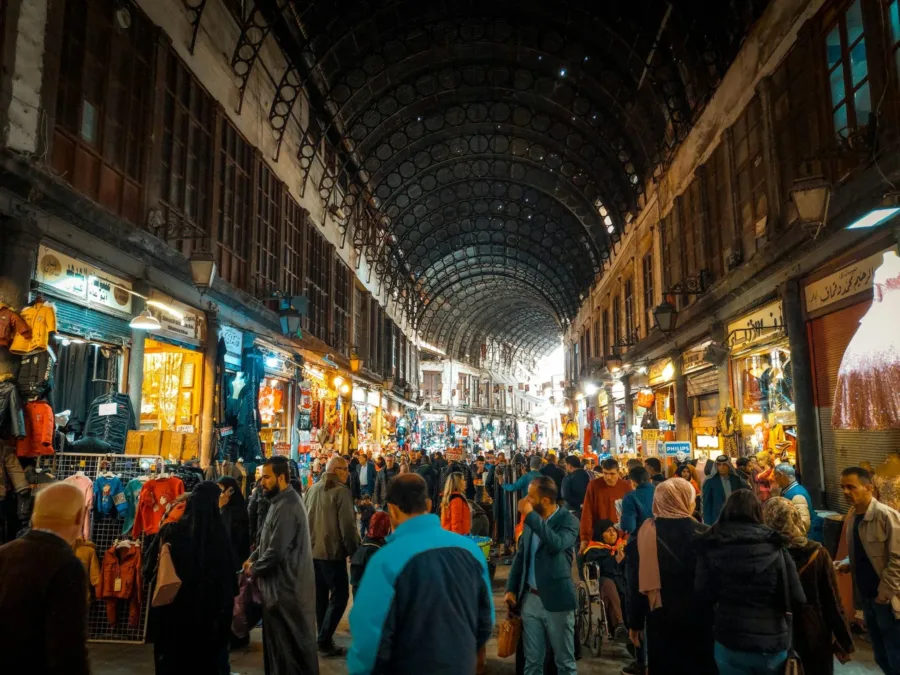
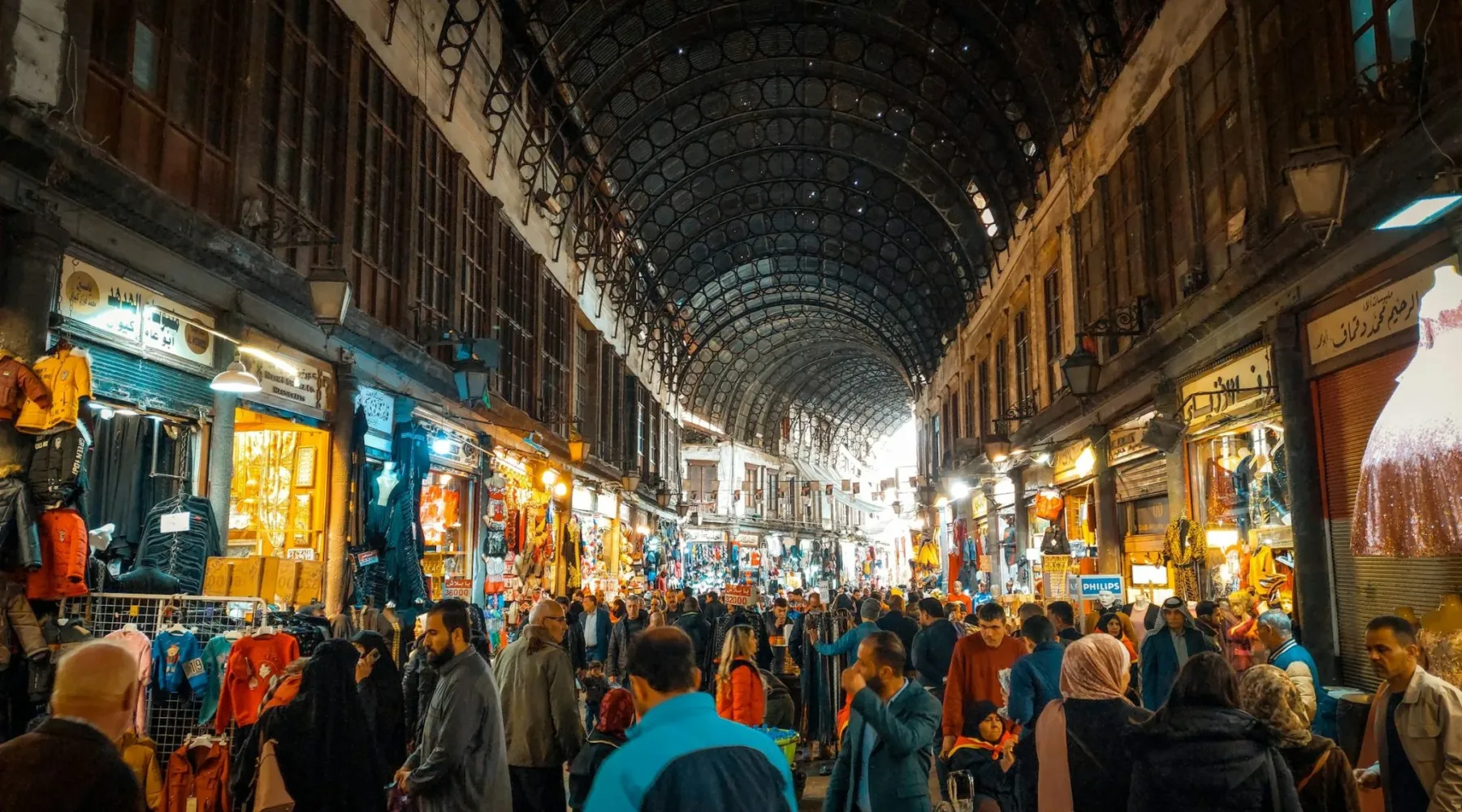
The one name every Damascene will give you is Bakdash, a booza parlor inside Souk al-Hamidiyah. Booza is Damascene ice cream with a distinctive stretchy, chewy texture, made using mastic and sahlab and traditionally pounded by hand with wooden paddles, a process that is half the reason people crowd the counter. Accounts differ slightly on exactly when Bakdash was founded, somewhere in the 1880s to 1890s, but nobody disputes that it is a genuine Damascus landmark with a history stretching back well over a century.
Other Historic Spots Worth Knowing About
A few other names are fixtures of the Old City: An-Naufara, the coffee house beside the Umayyad Mosque long known for hosting a hakawati, a live storyteller, a wonderful old Damascene tradition in its own right; and the restaurants set inside converted courtyard houses, a distinctly Damascene way of dining that turns a centuries-old home into a room built around open sky. Which of them is serving on the day you arrive is another matter. Ask us before you come and we will tell you what is actually open that week.
A Note on Hospitality Customs
Levantine hospitality runs deep, and Damascus is no exception. Guests are typically given priority at the table, second and third helpings are pushed generously, and it's considered polite to accept at least some of what's offered rather than declining outright. If you're invited into someone's home, showing up with a small gift, sweets are always a safe choice, is a thoughtful gesture that will be noticed and appreciated.
Eat Well, Travel Well
Food in Damascus isn't a side note to a spiritual journey through the city, it's part of the same fabric of hospitality and history that makes the place worth visiting in the first place.