Tomb of Salahuddin al-Ayyubi (Saladin), Damascus: History and the Two Sarcophagi
In a small, quiet garden against the northern wall of the Umayyad Mosque rests one of the most consequential figures in medieval Islamic history. Sultan Salahuddin al-Ayyubi, known in the West as Saladin, is buried here in a modest mausoleum that says as much about the man's character as any battle he fought.
Who Salahuddin Was
Of Kurdish origin, Salahuddin rose through the service of the Zengid ruler Nur al-Din, eventually becoming vizier of Egypt and bringing an end to the Fatimid Caliphate there in 1171. After Nur al-Din's death in 1174, he extended his authority into Syria, and was proclaimed sultan of Egypt and Syria, effectively founding the Ayyubid dynasty.
His defining military achievement came at the Battle of Hattin on the fourth of July, 1187, near Tiberias, where his forces cut off a Crusader army from water and destroyed it, breaking Crusader military power in the Levant. Later that same year, on the second of October, he recaptured Jerusalem after a short siege. What's genuinely notable, and worth stating without embellishment, is how the surrender was handled: residents were permitted to leave upon payment of a ransom, a bulk payment secured freedom for thousands of poorer residents who couldn't otherwise pay, native Eastern Christians and Jews were allowed to remain in the city, and the Church of the Holy Sepulchre stayed open, closed only briefly. It wasn't a bloodless affair, some residents unable to pay were enslaved, but set against the brutal Crusader conquest of the same city in 1099, the contrast in conduct became a central part of Salahuddin's historical reputation.
He died in Damascus on the fourth of March, 1193, and by most accounts had given away nearly all his personal wealth by the time of his death.
The Mausoleum and Its Two Sarcophagi
The mausoleum was built between 1195 and 1196, roughly three years after his death, under the direction of his brother, al-Adil I, who would later become the fourth Ayyubid sultan himself. It originally formed part of a larger madrasa complex, the Madrassah al-Aziziyah, though little of that surrounding structure survives beyond a few columns and an archway. The building itself is modest by design: a small square chamber built in the ablaq style of alternating light and dark stone, topped by a dome resting on four supporting arches, more dignified than grand.
Inside sit two sarcophagi, and this is one of the more memorable details for visitors. The original, made of wood and draped in gold-trimmed cloth, is understood to actually contain Salahuddin's remains. Beside it sits an ornate marble sarcophagus, added in 1898, which remains empty. Sources differ slightly on exactly how this second sarcophagus came about, whether the German Kaiser Wilhelm II personally commissioned it as a gift, or whether it was arranged by Ottoman Sultan Abdulhamid II in connection with Wilhelm's visit, but what's firmly documented is that Wilhelm II toured the mausoleum on the eighth of November, 1898, and delivered a widely quoted speech praising Salahuddin as one of history's most chivalrous rulers, part of a broader effort to build German ties with the Ottoman Empire and the wider Muslim world. A gilt bronze wreath, associated with that same visit, adorned the marble sarcophagus for a time before being removed after the First World War, reportedly ending up in London's Imperial War Museum, though the precise chain of custody for that detail isn't fully confirmed.
A Personal Connection to the Mosque Next Door
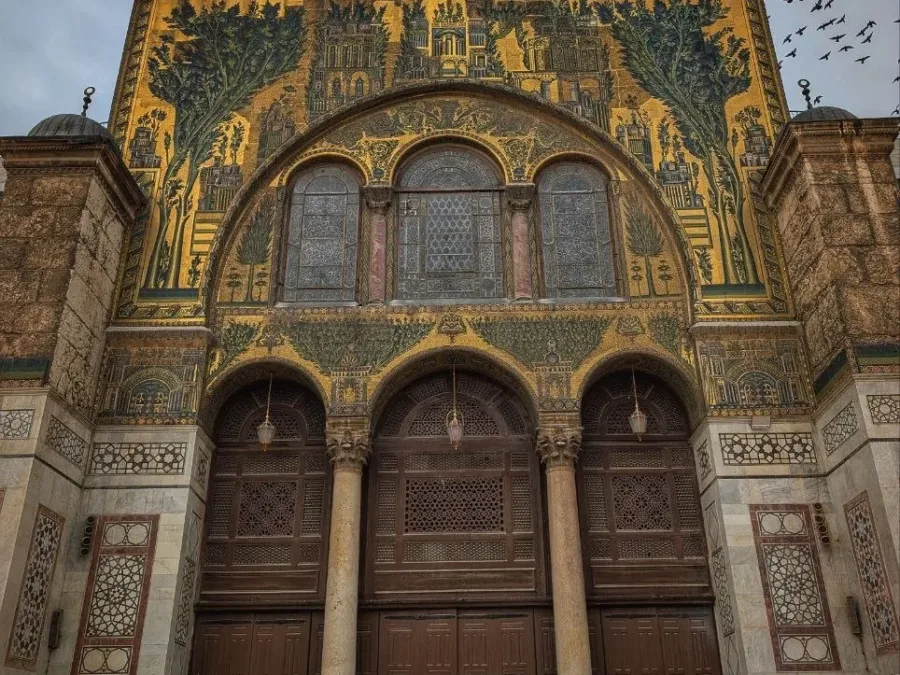
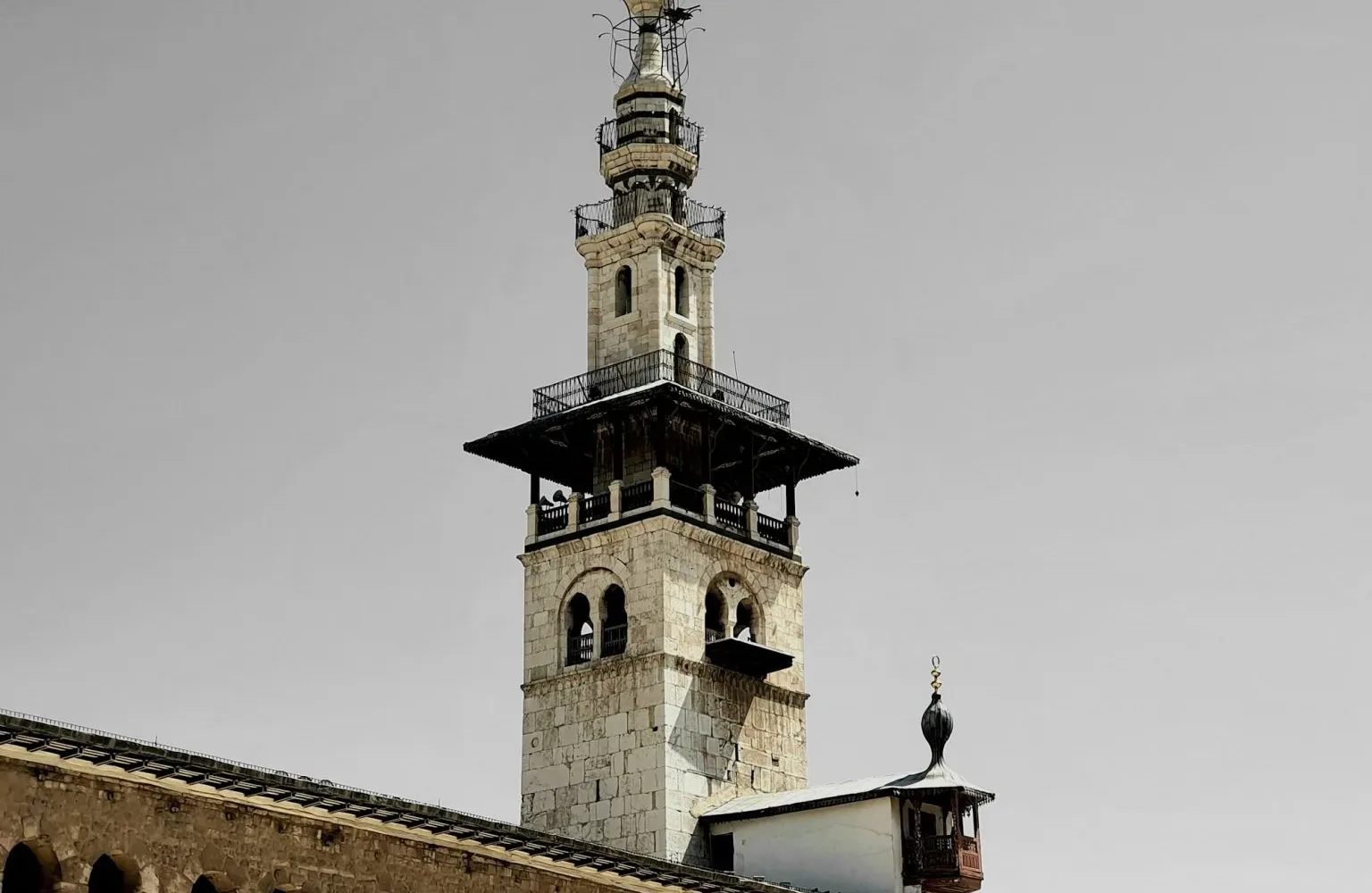
There's a nice historical thread connecting Salahuddin to the very wall his tomb stands against. After a fire damaged the Umayyad Mosque in 1173, it was Salahuddin himself who rebuilt the mosque's northern wall and its Minaret of the Bride, some twenty years before his own burial in a small garden against that same wall. The mosque's own historical record notes that Salahuddin, along with several of his successors, came to be buried in the area surrounding the mosque more broadly, making this whole precinct something of an Ayyubid-era resting ground rather than a single isolated tomb.
Visiting Today
Opening hours and entry arrangements here move around, as they do across the Old City, so ask us closer to your dates rather than trusting anything printed in advance. The broader Old City, of which this site forms a part, has been on UNESCO's List of World Heritage in Danger since 2013 because of risks connected to years of conflict, though that reflects general risk to the historic city rather than a confirmed report on this building.
A Fitting Stop After the Mosque
Most visitors pair a visit to Salahuddin's tomb with their time at the Umayyad Mosque next door, and it's a natural pairing, moving from the grandeur of one of Islam's oldest mosques to the quiet, unassuming resting place of the man who gave Jerusalem back to Muslim hands.