The Illuminated Souls of Sham: Shaykh Badr al-Din al-Hasani
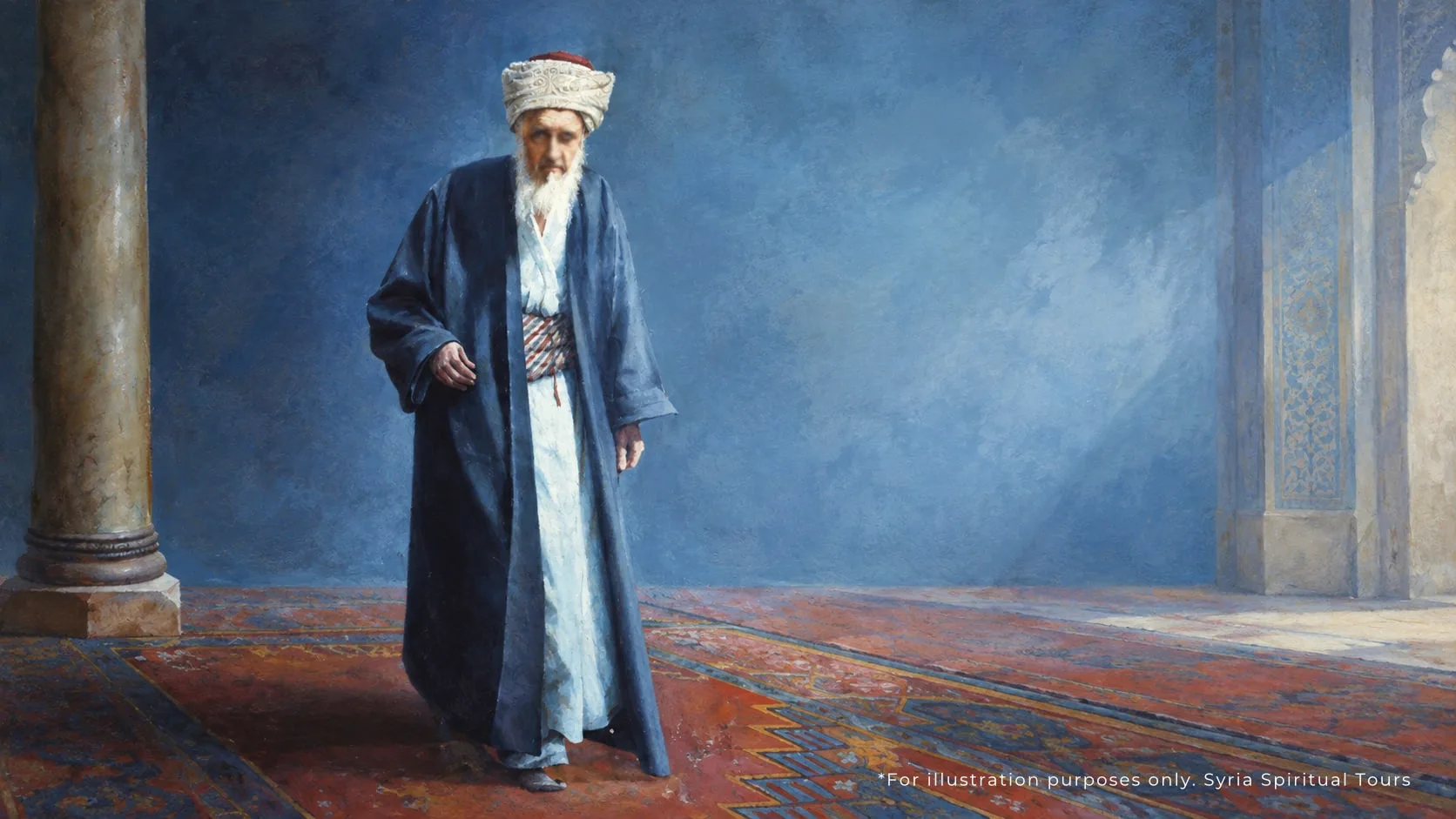
There are figures in Islamic history whose light seems to illuminate not just their own time, but the centuries that follow. Shaykh Badr al-Din al-Hasani was one such figure. He was known as the Muhaddith al-Akbar, the great hadith master of his age, and he spent almost the whole of his life inside the walls of Damascus.
Who He Was
He was born in Damascus in 1267 AH, which falls in 1850, the son of Shaykh Yusuf al-Maghribi, a travelling scholar of Moroccan descent, and Sayyida A'isha al-Kuzbari, who came from one of the foremost hadith families of the city. His lineage is traced back to Sayyidna al-Hasan ibn Ali (may Allah be pleased with him).
By the age of seven he had memorised the Quran. His father died when he was twelve, and it is said that he then shut himself away in his father's room at the Dar al-Hadith for seven years, reading and committing whole books to memory.
A Memory Without Equal
It has been reported that he knew the Sahih of al-Bukhari and the Sahih of Muslim by heart, with the chains of narration and the lives of the narrators along with them, and that he had memorised the remaining four of the six famous collections together with their commentaries. He is said to have been able to explain the Quran from memory using the tafsir of al-Baydawi.
Students came to him from across the Muslim world for his ijazah, his certification, because his chain of transmission back to the Prophet ﷺ was among the shortest of his generation. The Mufti of Egypt, Shaykh Muhammad Bakheet, is reported to have said of him, "If he was with us in Egypt, scholars would carry him over their shoulders."
Humility in a Hard Time
For all of that learning, what the people of Damascus remembered was his humility. He lived simply and worshipped much, and he was never far from the life of the city. During the French occupation of Syria he was one of the voices who held the community together, using the respect he was given to steady his students and the people around him.
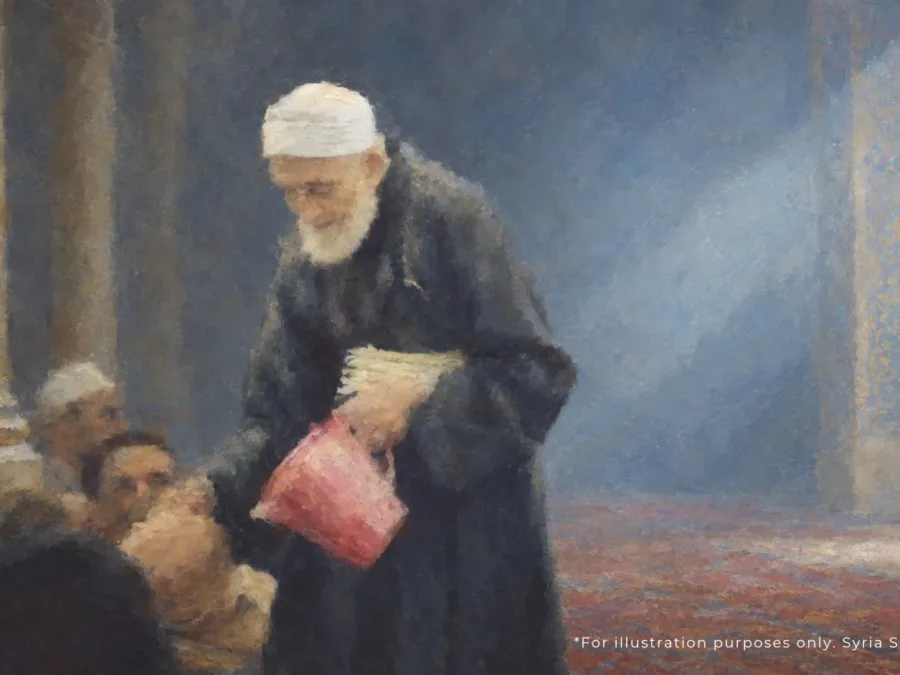
His concern reached the people others overlooked. It is narrated that in those years, when many women in the city had been driven into poverty, he would send his students to them with charity and tell them to say, "Badr al-Din al-Hasani asks you to make supplication for him." The women would weep and answer, "Who are we to make du'a for Badr al-Din al-Hasani?"
His gatherings filled with students of sacred knowledge, but also with ordinary Damascenes who came simply to sit near him. It is said that when he walked through a quarter, people would come to their windows to see him pass. Among those who sat with him were doctors and engineers who admitted afterwards that he knew their own fields better than they did.
Where He Rests
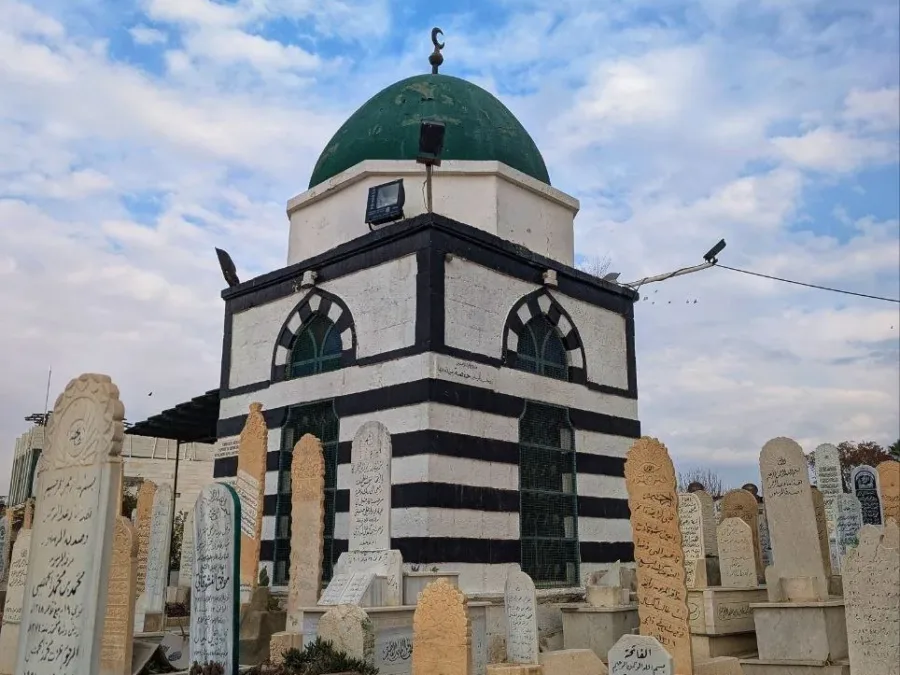
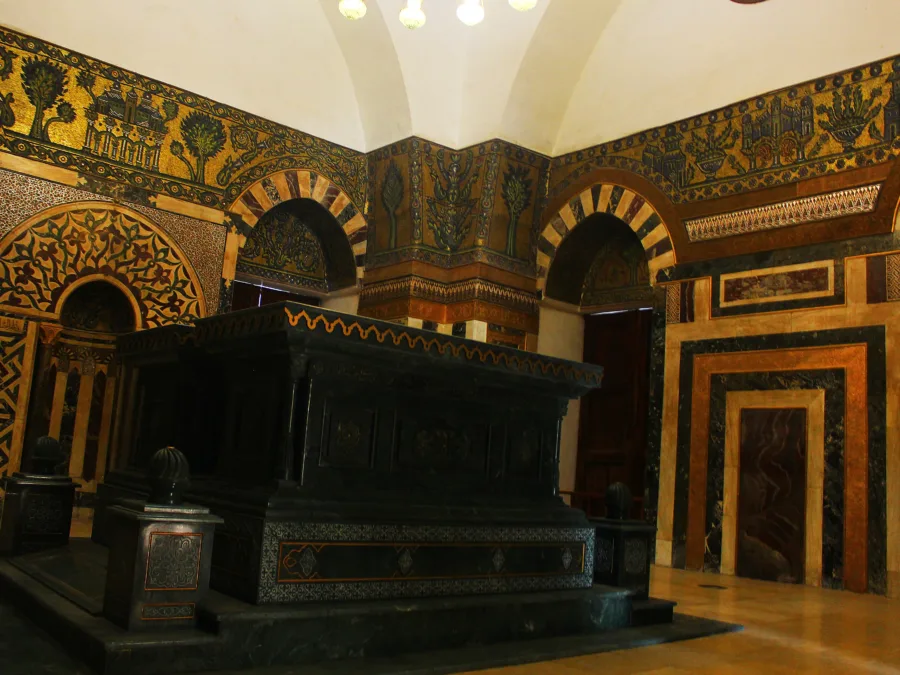
Shaykh Badr al-Din al-Hasani died in 1354 AH, which falls in 1935, in the city he had served his whole life. He is buried in Bab al-Saghir, the old cemetery that holds companions of the Prophet ﷺ and generations of the righteous of Sham. A mosque and an institute stand beside his grave and carry his name, and his son, Shaykh Yusuf al-Hasani, who took over the Dar al-Hadith after him, is buried alongside him.
It is a quiet corner of the city. Visitors come to pray, to read Fatiha, and to sit for a while in a place where knowledge was loved for a very long time.