Sayyida Zainab Shrine Near Damascus: History and Significance
About ten kilometers south of central Damascus, in its own town that bears her name, stands the shrine of Sayyida Zainab, granddaughter of the Prophet Muhammad ﷺ. Honoring the Prophet's ﷺ family is part of every Muslim's faith, regardless of school of thought, and her story is worth knowing well before you ever reach the shrine itself.
Who Sayyida Zainab (RA) Was
Born around 626 CE, Zainab bint Ali (RA) was the eldest daughter of Sayyida Fatima (RA) and Imam Ali (RA), and so the granddaughter of the Prophet ﷺ himself. She lived through the deaths of her grandfather, her mother, and eventually her father, who was assassinated in 661 CE. She married her cousin Abdullah ibn Ja'far and raised a family of her own, two of whose sons would later be killed alongside her brother at Karbala.
Karbala and Its Aftermath
On the tenth of Muharram, 61 AH (680 CE), Zainab (RA) stood beside her brother, Imam al-Husayn (RA), at Karbala. She watched her own sons go into battle and lose their lives, tended to the wounded, and comforted the grieving. When Husayn (RA) himself was killed, she is remembered as saying, "O God, accept from us this offering." She is also credited with intervening to protect her young nephew, Ali ibn Husayn, later known as Zayn al-Abidin, from execution.
What followed her brother's death is, in many ways, just as significant as the battle itself. Zainab (RA) and the surviving women and children were marched first to Kufa and then to Damascus, brought before the Umayyad caliph Yazid's court as captives. Along the way, she delivered public speeches, rebuking the people of Kufa in their own marketplace and confronting the governor Ibn Ziyad with Qur'anic verses, and she spoke with the same defiance in Yazid's own court in Damascus. Historical accounts, including the work of the early historian al-Tabari, credit her words with keeping the memory of Karbala alive and with embarrassing Yazid publicly enough that he distanced himself from the massacre. Many historians describe this as a "jihad of words," and it is hard to overstate how central her testimony became to how Karbala is remembered across the Muslim world to this day.
She died in 682 CE, in her mid-fifties.
Where She Is Buried
The place of her burial is remembered differently in different places. The tradition attached to this shrine, and held by Twelver Shia, is that Zainab (RA) is buried in this town just south of Damascus. Al-Tabari the respected historian and others have placed her grave in Cairo, based on a separate tradition that she was exiled to Egypt after Karbala and died there some months later, and Cairo has its own shrine to Sayyida Zainab.
Both cities hold long-standing traditions, and both are visited with love. We take our guests to the shrine here and share what has been passed down about it.
The Shrine Today
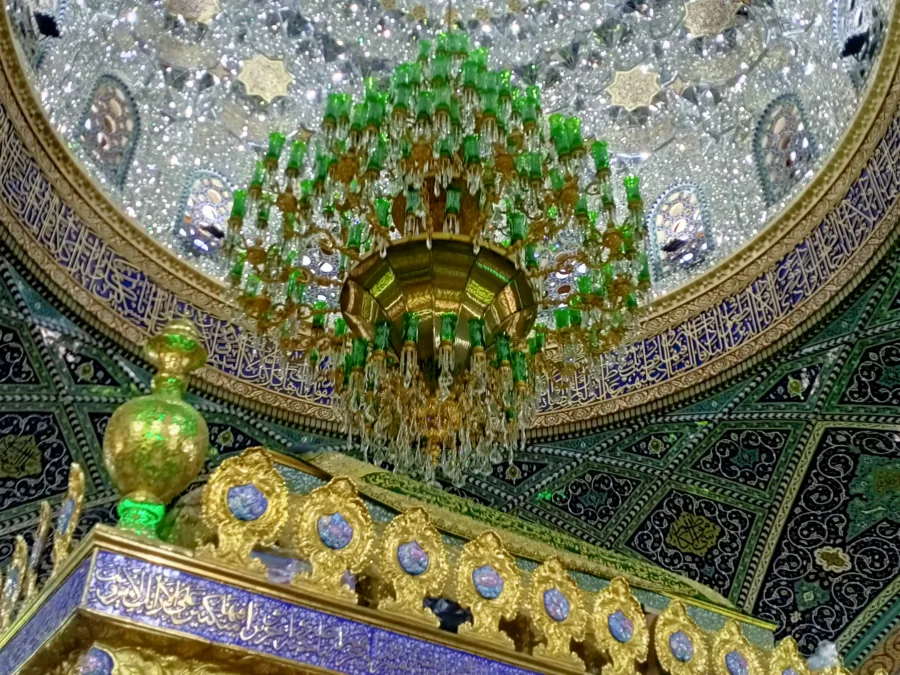
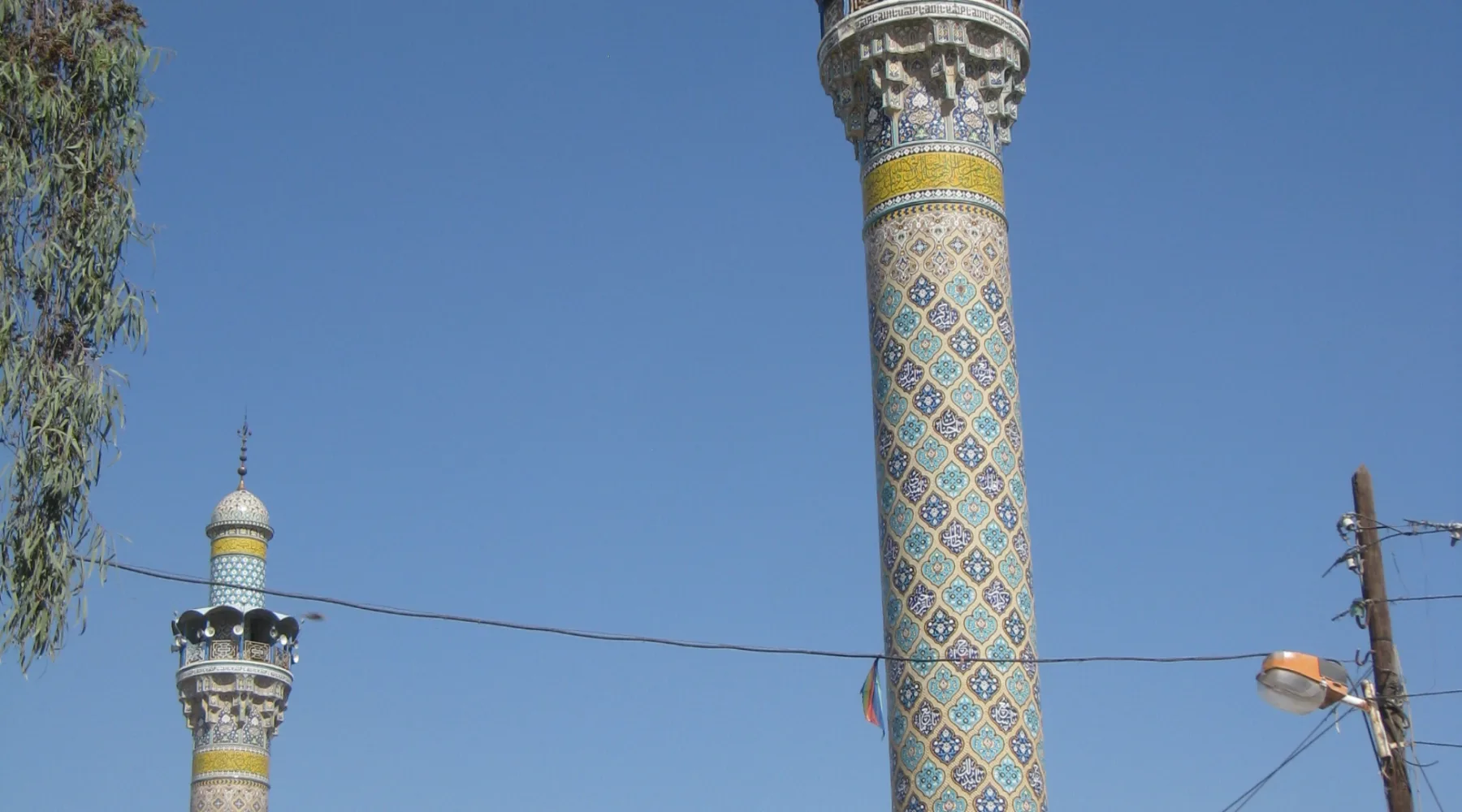
The current shrine building was constructed in 1990, in a distinctly Persian architectural style, with a gilded dome, twin minarets, and an expansive courtyard complex. It has grown since the 1980s into a significant center of pilgrimage, drawing visitors especially from Iran and Iraq.
Loved Across the Muslim World
Honoring the Ahlul Bayt, the Prophet's ﷺ own family, is close to the heart of every Muslim. Blessings upon the Prophet's ﷺ household are part of the five daily prayers observed by Muslims everywhere, and the descendants of Ali (RA) and Fatima (RA) are held in deep affection across the Muslim world. A visit here is, for any traveler, an opportunity to reflect on the sacrifice of Karbala and the courage of a woman who carried its memory forward.
Visiting
The shrine sits in its own town about ten kilometers out, so it needs a car rather than a walk from the Old City. We arrange that as part of a wider itinerary, and we will tell you the best time to go.