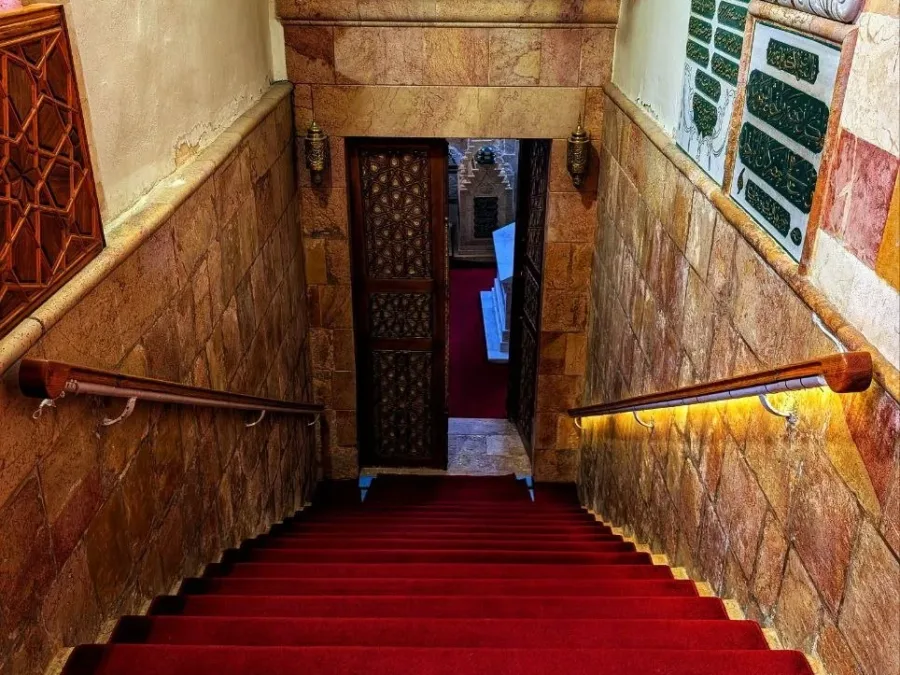
Jabal Qasioun and the Cave of Blood, Damascus: Legend, Faith and the View Over the City
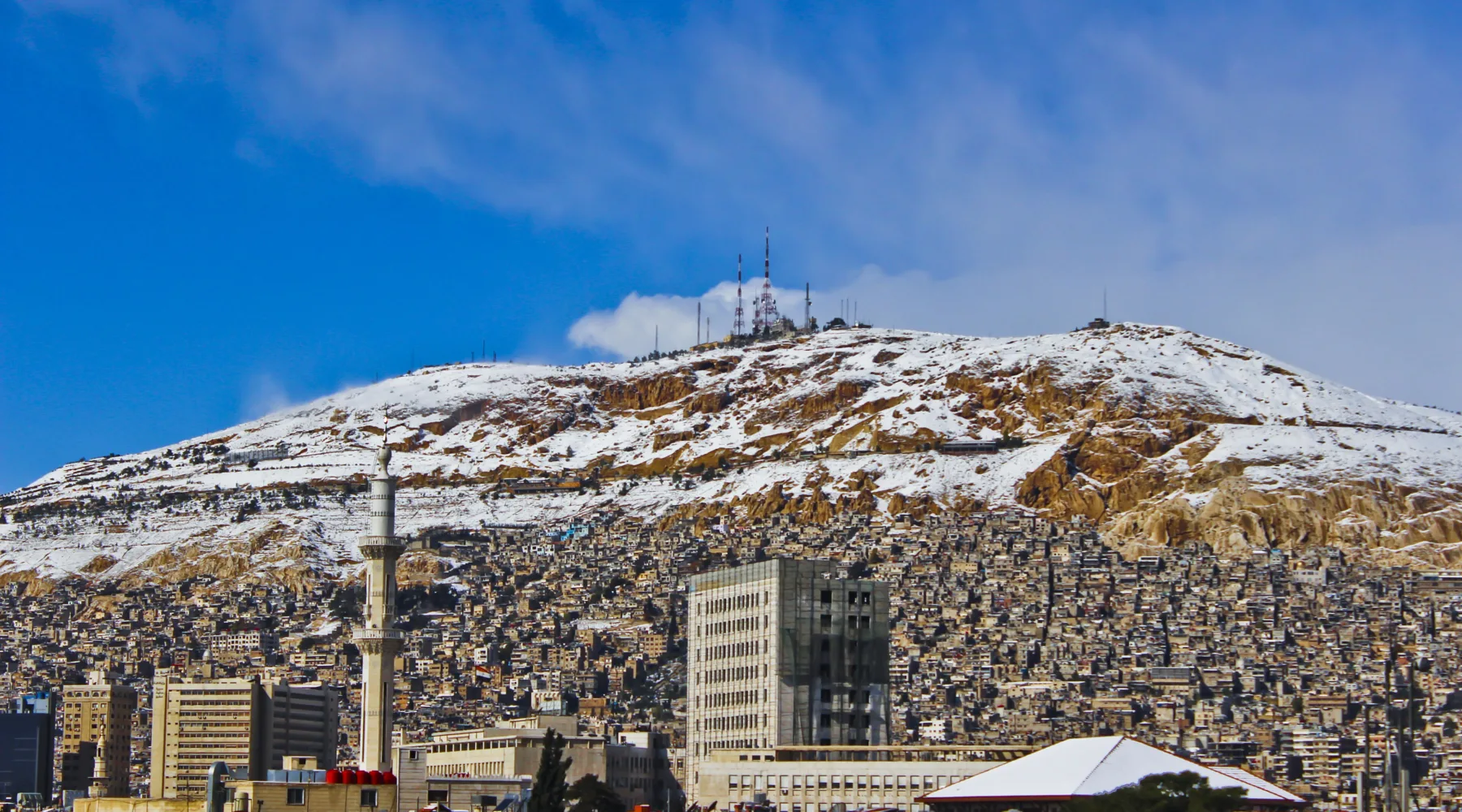
Rising to 1,151 meters above sea level, Mount Qasioun is the city's dominant natural landmark, visible from nearly everywhere in the old town below. On its slope sits a small cave with a name that stops most visitors in their tracks: Maghara al-Dam, the Cave of Blood, tied for centuries to the Qur'anic story of the first murder in human history.
The Qur'anic Story, and Where It Is Not Located
The Qur'an, in Surah al-Ma'idah, verses 27 through 31, tells the story of the two sons of Adam, traditionally known as Qabil and Habil, Cain and Abel. One brother's sacrifice is accepted, the other's is rejected, and out of envy the rejected son kills his brother, later learning from a raven how to bury the body. It's worth being direct about something important here: the Qur'an itself specifies no location whatsoever for these events. Classical commentary on the verses, including the well-known tafsir of Ibn Kathir, likewise attaches no place name to the story.
The tradition connecting this event to a particular cave on Mount Qasioun comes to us through the Qisas al-Anbiya, the Stories of the Prophets, a body of literature that grew from the ninth century onward and has been valued for its moral and devotional lessons. The scholars have understood that the biographical and qisas traditions are authenticated by a less rigorous methodology than the hadith sciences, with a more relaxed threshold of acceptance. That is a difference in method, not a judgement against the material, and these narrations have been carried and loved in Damascus for many centuries.
A Very Old Local Tradition
None of this means the tradition is new or shallow. Quite the opposite. The renowned twelfth-century Damascene historian Ibn Asakir, author of the massive History of Damascus, recorded in a personal anecdote that his own mother was instructed in a dream to bring him to "the Grotto of Blood on Mount Qasyun" on the fortieth day after his birth, to give alms there. That detail alone tells us the site was already an established, named place of popular religious visitation by the mid-twelfth century, quite possibly centuries earlier. Later medieval travelers, including Ibn Jubayr in the twelfth century and Ibn Battuta in the fourteenth, described visiting the site and noted reddish traces in the rock that popular belief connects to the story.
Around the cave, a rich layer of local legend has grown over the centuries: that the mountain wept and its ground was cursed never again to absorb spilled blood, that pinkish rock marks the spot of Abel's blood, that handprints in the stone belong to the angel Jibreel (AS), and that water dripping steadily from the cave's ceiling represents the mountain's ongoing tears. These are devotional and folkloric elements layered onto the older tradition, worth knowing and appreciating as exactly that, rather than treating them as historical claims.
More Than One Story Attached to This Mountain
The Cave of Blood isn't the only tradition tied to Qasioun. Local belief also holds that Prophet Adam (AS) once lived in this cave, that Prophet Ibrahim (AS) and Prophet Isa (AS) prayed there, and that a group of prophets once took shelter inside from an unjust ruler, with the mountain miraculously splitting to let them escape. A nearby site, sometimes called the Cave of the Seven Sleepers, is locally identified with the Qur'anic story of the Companions of the Cave in Surah al-Kahf. It's worth knowing that Qasioun is far from the only place in the Muslim world making this particular claim. Ephesus in Turkey, along with sites in Afşin, Tarsus, and Amman, all host their own long-standing traditions about the same story, and none of them has been established with certainty as the original location. This pattern, several regions each holding a sincere local tradition about the same Qur'anic event, is common across Islamic sacred geography, and Qasioun's traditions should be understood within that broader, very normal pattern rather than as a unique claim to certainty.
The Mountain Today
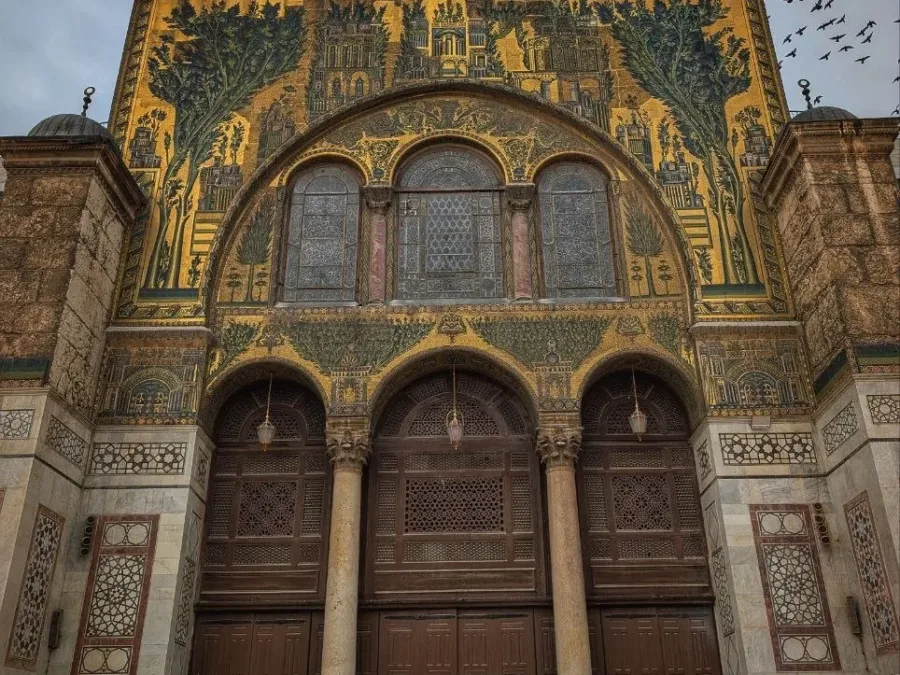
Qasioun has long been known as Damascus's great viewpoint, its slopes lined with cafés where residents and visitors watch the city and its lit minarets after dark. It remains one of the best places to take in the full sweep of the Old City, the Umayyad Mosque included, especially in the hour before sunset. As with any site on a trip abroad, it's worth checking current access and conditions closer to your travel dates, particularly for the Cave of Blood itself, which sits lower on the slope than the main summit viewpoint.
Worth the Climb
Whatever your view on the specific traditions attached to it, few experiences in Damascus compare to standing on Qasioun as evening falls and the whole Old City, the Umayyad Mosque included, spreads out below you in the fading light.